Most gymnastics gym owners I talk to are focused on the next session. Will fall classes fill? Can I cover payroll in July? Did that head coach really mean it when she said she might leave? Those questions matter, but running a strong gymnastics center business takes more than getting through one session at a time.
The gyms that last are the ones whose owner’s step back once or twice a year and look at the bigger picture: what is happening around the gym, and who has power over it. That outside view shapes everything from your gym enrollment strategy to your long-term gymnastics center profitability.
I have spent over 42 years in gymnastics. I taught preschool classes, coached rec programs and DP competition levels, and helped design and run gymnastics centers. Today I provide bookkeeping for gymnastics centers, so I see the numbers behind the gym floor too. Two simple frameworks from the business world, STEP and Porter’s Five Forces, line up surprisingly well with what I have seen as a coach and as a bookkeeper.
Here is how they apply to a gymnastics gym owner, and what to do about each one.
Part 1: STEP, the world around your gym
STEP looks at four outside forces: Social, Technology, Economic and Political. You cannot control them, but you can plan for them.
Social: families, seasons and safety
Enrollment follows the calendar. It climbs in the fall with back to school, jumps again in January, and dips in summer when families travel. Every Olympic year brings a wave of new kids who saw gymnastics on TV.
Parents make the buying decision, and they choose on safety, coaching, convenience and whether their child is happy. Most families are juggling two jobs and several activities, so a class that fits the schedule often beats a cheaper one across town. Parents also pay close attention to athlete welfare, and they should.
What to do:
- Plan marketing around the calendar. Push fall registration in July and August, run New Year promotions in December, and fill summer with camps, clinics and punch passes.
- Make life easy for busy parents: sibling classes back to back, times that match school pickup, and a comfortable viewing area.
- Add ninja, tumbling or parkour to keep kids who are not on a traditional gymnastics path.
- Put your safety policies and coach certifications on your website and mention them on every tour.
- Send skill cards, progress notes and photos so parents can see what they are paying for.
Technology: how families find you and pay you
Parents find gyms on Instagram, Facebook and Google. They expect to book a trial class online at 10 PM, sign waivers on their phone, and pay on autopay. Class management software such as iClassPro or Jackrabbit handles most of this. Video and AI tools are also changing how coaches give feedback and how owners handle marketing.
What to do:
- Run enrollment, waivers and billing through one system with a parent portal and autopay.
- Post short videos every week of skills, milestones and smiling kids, with parent permission.
- Use online booking for trial classes and birthday parties.
- Let AI tools draft newsletters and social posts so your staff can spend more time coaching.
- Budget for equipment upgrades in phases instead of waiting for something to break.
Economic: high fixed costs, careful families
A gymnastics center carries heavy fixed costs: a large building, expensive equipment, liability insurance and payroll. That means the break-even point is high and every empty spot in a class costs you money. Tuition is also discretionary, so families watch it closely when budgets get tight. Good coaches are hard to find, and their pay keeps rising.
What to do:
- Track profit by program: preschool, rec, team, camps, parties and open gym. You may find one program is carrying the others.
- Watch the fill rate of each class time and combine slots that stay half empty.
- Use an annual registration fee and require autopay to steady your cash flow.
- Reward loyalty with sibling and prepay discounts instead of cutting prices across the board.
- Build a cash reserve for the slower summer months.
- Review your insurance every year with a broker who knows gymnastics.
Political and legal: rules that protect kids and your business
Federal law and USA Gymnastics rules require abuse-prevention training, background checks and reporting policies for member clubs. Liability waivers, incident reports and employment rules all carry real risk. Treating coaches as independent contractors when they should be employees is one of the most common problems I see in a gym’s books. Zoning, occupancy limits and changes from governing bodies round out the list.
What to do:
- Keep SafeSport training, background checks and memberships current for every staff member, with a sheet that tracks expiration dates.
- Have an attorney review your waivers and incident report process.
- Run coaches through payroll unless they truly qualify as contractors.
- Check zoning and occupancy rules before you expand or move.
- Follow rule changes from your governing body so your team schedule and budget are never caught off guard.
Part 2: Porter’s Five Forces, who holds the power
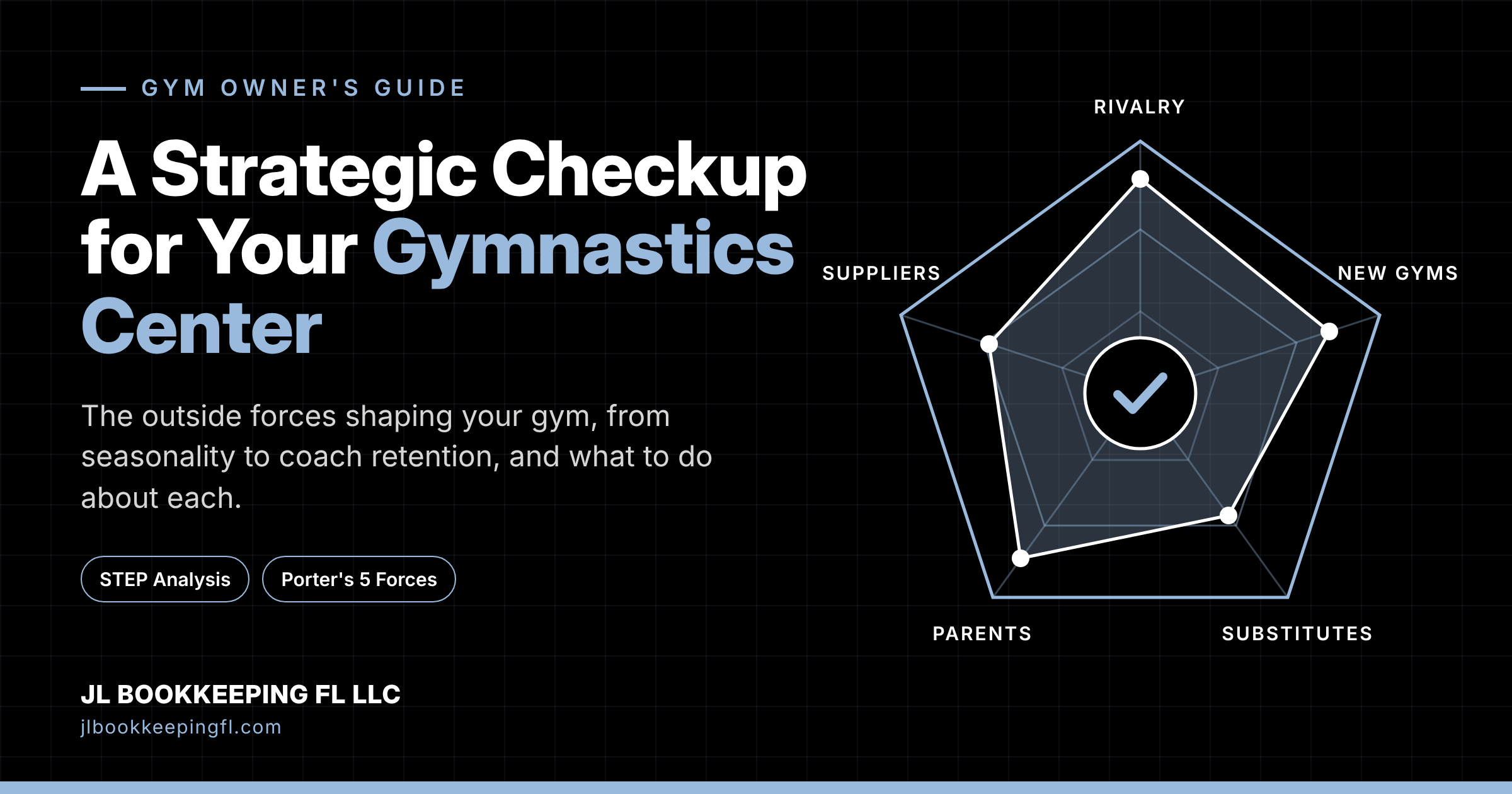
Porter’s Five Forces looks at the pressure on your gym from five directions. The stronger a force, the more it squeezes your prices and profits.
Buyers (parents): moderate power
Parents have plenty of choices and can switch between sessions with little effort. Prices get compared in local Facebook groups, and a few unhappy parents can sway many others. But once a child bonds with a coach and friends, especially on team, leaving gets much harder.
What to do:
- Raise the cost of leaving with skill ribbons, showcases, level testing and strong coach relationships.
- Offer a referral credit so happy parents recruit for you.
- Handle complaints quickly and personally, before they show up online.
- Use a free or low-cost trial class to turn inquiries into enrollments.
Suppliers (coaches, equipment and landlords): moderate power
Your most important supplier is your coaching staff. Strong coaches are scarce, and a head coach who leaves can take families and team athletes with them. A handful of manufacturers control pricing on major equipment, and few buildings have the ceiling height a gym needs, which gives landlords leverage.
What to do:
- Keep good coaches with a clear pay scale, raises for certifications, paid training and a path to head coach.
- Grow your own coaches by hiring former team athletes and training junior staff.
- Build loyalty to the gym, not just one coach. Ask your attorney whether non-solicitation agreements make sense in your state.
- Buy equipment during manufacturer sales, use certified used equipment where it makes sense, and negotiate long leases with renewal options.
Rivals (other gyms): moderate to high pressure
Most markets have several independent gyms plus franchises, YMCAs and parks programs. Everyone wants the same preschool and rec families, and team athletes get recruited between gyms.
What to do:
- Pick a clear strength, such as the best preschool program, the top competitive team or the most family-friendly rec gym and market it.
- Know your competitors’ prices and schedules and compete on value rather than price.
- Keep the facility spotless and well organized. Parents notice it on the first tour.
- Ask happy families for Google reviews after milestones like level testing or a good meet.
Substitutes (other activities): high pressure
Dance, cheer, martial arts, swim, soccer, ninja gyms, trampoline parks and parkour all compete for the same kids and the same after-school hours. Cheer programs pull older rec kids, and trampoline parks go after birthday parties.
What to do:
- Market gymnastics as the base sport that builds strength, flexibility and body awareness for every other sport.
- Bring the substitutes under your roof with ninja, tumbling for cheerleaders and flexibility clinics.
- Win back birthday parties with themed packages, coach-led games and easy online booking.
- Offer cross-training classes to local cheer and dance teams.
New entrants: low to moderate threat
A full gymnastics center is expensive to build and needs experienced coaches, so brand-new gyms are rare. Smaller players get in more easily: tumbling-only spaces, ninja gyms, mobile preschool programs that visit daycares, and former coaches who open a gym down the street.
What to do:
- Lock in families with annual memberships, team contracts and prepaid sessions.
- Partner with local daycares and preschools before a mobile program does.
- Build community ties through school demos, local events and scout badge programs.
- Treat your coaches well, so they never want to open a competing gym with your families.
Where your books fit in
Almost every action above comes back to one question: do you know where your money comes from and where it goes, program by program?
You cannot price team fairly if you do not know what team costs. You cannot decide whether to add a ninja class, drop a slow Tuesday slot or invest in a new floor without real numbers behind the decision. That is why the first report I pull for any gymnastics center is a profit and loss by program, not just total revenue.
In QuickBooks Online, that means setting up a Class for each program, tagging every tuition payment and every cost to the right Class, and running Profit and Loss by Class every month. It takes some setup, but once it is in place you can see exactly which programs are carrying the gym. You can learn more about how I help gyms with this on my Gymnastics Centers bookkeeping page
Take the next step
Set aside an hour this month and walk through these two frameworks for your own gym. Write down the one or two forces that worry you most and pick one action for each.
If you want help getting your books set up so the numbers support those decisions, I work with gymnastics centers across the U.S. on bookkeeping, payroll, cleanup and QuickBooks setup. My Monthly Bookkeeping Services keep your program-by-program numbers current, so you always know which classes are paying off. Book a free consultation and we can look at your gym together.
Jeffrey Levine, JL Bookkeeping FL LLC
Frequently Asked Questions
Once or twice a year is enough for most gyms. A good time is late spring, before you set fall pricing and schedules, and again in December before New Year enrollment picks up. Walk through STEP and the Five Forces, note the one or two forces that worry you most, and choose one action for each.
Start by tracking profit by program: preschool, rec, team, camps, parties and open gym. Many owners find that one or two programs are carrying the rest. From there, combine class times that stay half empty, require autopay, use an annual registration fee, and reward loyalty with sibling and prepay discounts instead of cutting prices across the board.
Plan your marketing around the calendar. Push fall registration in July and August, run New Year promotions in December, and fill the summer dip with camps, clinics and punch passes. Free or low-cost trial classes, online booking and a referral credit for happy parents help turn interest into enrollments all year.
A total revenue number can’t tell you whether team is priced fairly, or whether a new ninja class or a new floor is worth it. In QuickBooks Online, setting up a Class for each program and running Profit and Loss by Class every month shows you exactly where your money comes from and where it goes. It also helps you catch common payroll problems, like coaches paid as contractors when they should be employees.