

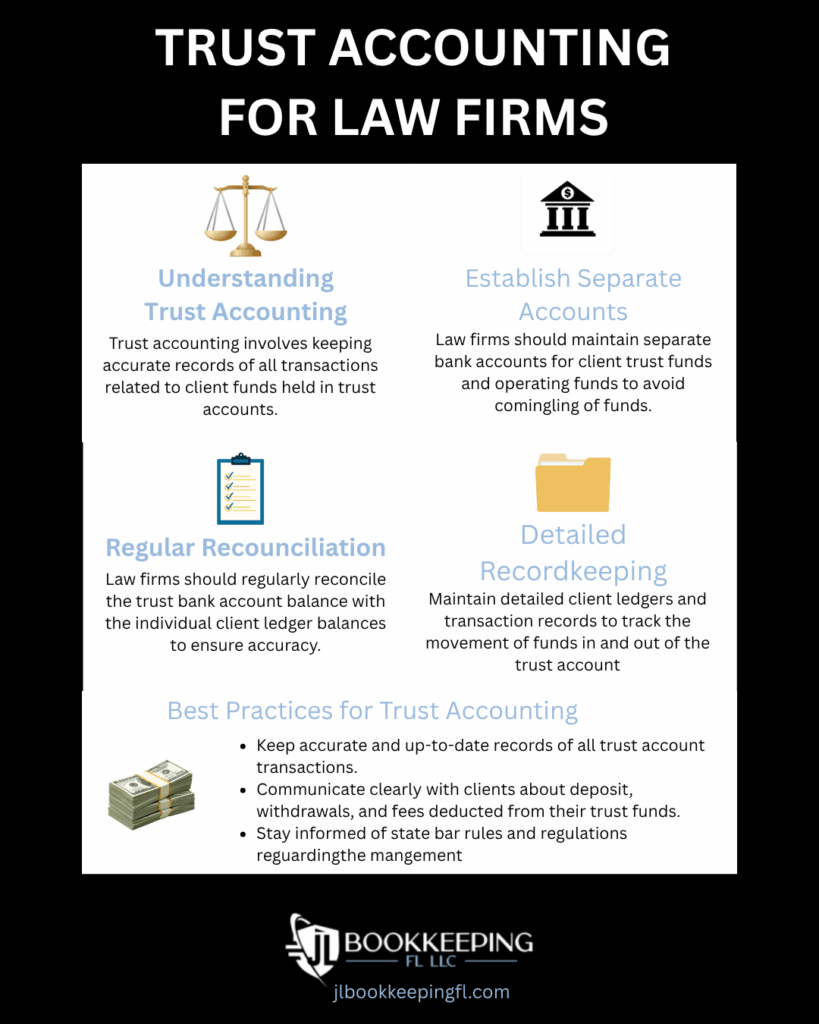
Trust accounting refers to the management of client funds held in trust—typically in an IOLTA (Interest on Lawyers Trust Account). These funds may include retainers, settlement proceeds, or court fees. Unlike operating accounts, trust accounts are not the law firm’s money. They must be handled with strict adherence to state bar rules and ABA guidelines.
Key Principles:
- No commingling: Client funds must be kept separate from firm funds.
- Earned vs. unearned: Only withdraw funds once earned or disbursed for client expenses.
- Detailed records: Track every transaction with client-specific ledgers and reconciliations. 1 2
⚖️ Why Trust Accounting Matters
Improper trust accounting is one of the leading causes of attorney discipline. Even well-meaning firms can face penalties for:
- Failing to reconcile accounts monthly
- Withdrawing funds prematurely
- Losing track of client balances
In one case, a lawyer was suspended for six months—not for theft, but for failing to reconcile his IOLTA account for three years. 3 The ABA reports that 38% of ethics violations involve trust account mismanagement. 3
🛠️ Best Practices for Law Firms
To stay compliant and protect your reputation:
1. Use Legal-Specific Accounting Software
Tools like LeanLaw, MyCase, and Tabs3 integrate trust accounting features that automate compliance tasks and generate audit-ready reports. Sources: 1 4 5
2. Reconcile Monthly
Reconcile your trust account against bank statements and client ledgers every month. This ensures accuracy and prevents surprises during audits.
3. Train Your Team
Everyone handling trust funds should understand the rules. Provide regular training and document procedures.
4. Segregate Duties
Separate roles for fund handling, recordkeeping, and reconciliation to reduce risk and increase accountability.
5. Audit Yourself
Conduct internal audits quarterly. Look for missing documentation, unreconciled balances, or outdated client records.
📈 Final Thoughts
Trust accounting isn’t just a compliance issue—it’s a reflection of your firm’s integrity. By implementing strong systems and educating your team, you safeguard your clients, your license, and your peace of mind.