

Running a successful law firm isn’t just about winning cases—it’s also about managing a healthy business. Yet many lawyers find themselves overwhelmed by financial reports, unsure of what the numbers mean or how to use them. If that sounds familiar, you’re not alone.
This guide breaks down three essential Law firm’s financial reports—Profit and Loss Statement, Balance Sheet, and Aged Accounts Receivable—into plain English, so you can make smarter, more strategic decisions for your firm.
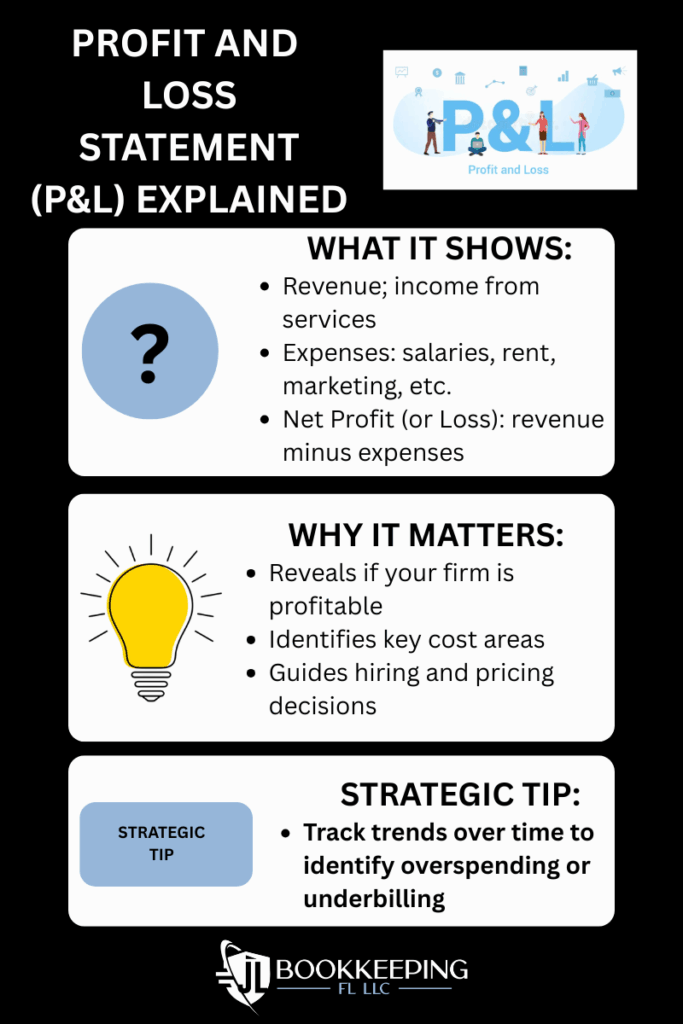
Profit and Loss Statement (P&L): Your Firm’s Financial Story
Think of the P&L as a movie of your firm’s financial performance over a specific period—monthly, quarterly, or annually.
What It Shows:
- Revenue: Income from legal services, retainers, consultation fees, etc.
- Expenses: Salaries, rent, software subscriptions, marketing, and more.
- Net Profit (or Loss): What’s left after expenses are subtracted from revenue.
Why It Matters:
- Reveals whether your firm is profitable.
- Helps identify cost overruns or underperforming practice areas.
- Guides decisions on hiring, marketing, and pricing.
Strategic Tip:
Track trends over time. If revenue is rising but profit isn’t, dig into your expenses—are you overspending on overhead or underbilling clients?
Balance Sheet: A Snapshot of Financial Health
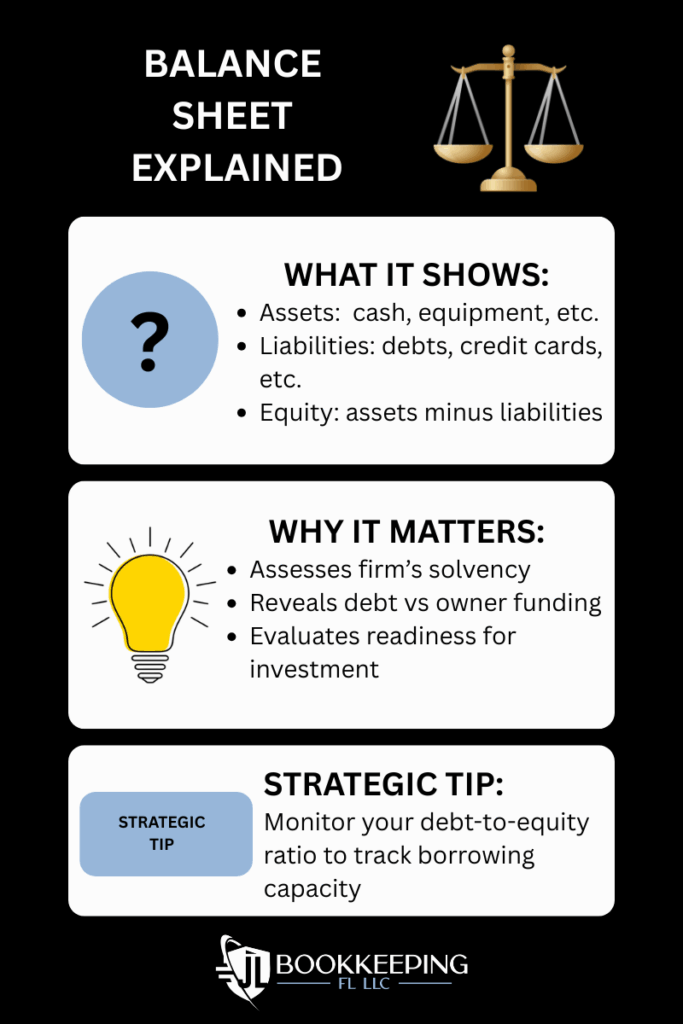
Unlike the P&L, the balance sheet is a snapshot of your firm’s financial position at a single point in time.
What It Shows:
- Assets: What your firm owns—cash, accounts receivable, office equipment.
- Liabilities: What your firm owes—credit card balances, loans, unpaid bills.
- Equity: The net worth of your firm (Assets – Liabilities).
Why It Matters:
- Shows whether your firm is solvent.
- Helps assess borrowing capacity and investment readiness.
- Reveals how much of your firm is funded by debt vs. owner’s equity.
Strategic Tip:
Monitor your debt-to-equity ratio. A high ratio may signal overreliance on borrowing, which can strain cash flow and limit growth.
Aged Accounts Receivable: Who Owes You Money—and How Long It’s Been
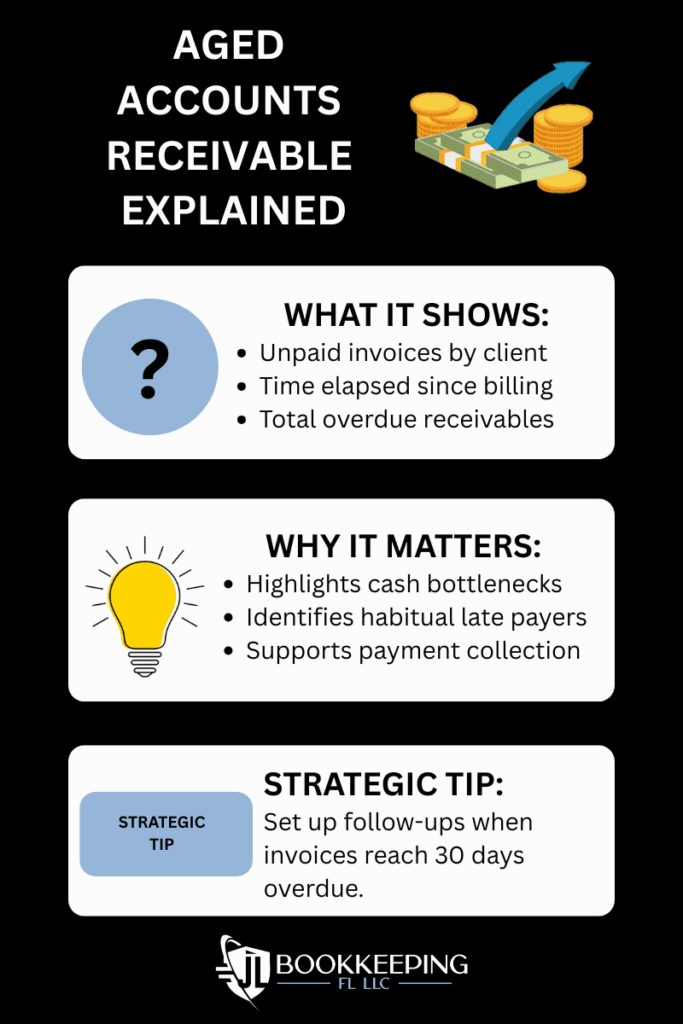
This report breaks down unpaid client invoices by age—typically 30, 60, 90+ days overdue.
What It Shows:
- Outstanding balances by client.
- Time elapsed since each invoice was issued.
- Total receivables and how much is at risk of non-payment.
Why It Matters:
- Helps you spot cash flow bottlenecks.
- Flags clients who consistently pay late.
- Supports decisions on collections, payment terms, or retainer policies.
Strategic Tip:
Set up regular follow-ups for invoices over 30 days old. Consider offering early payment incentives or requiring retainers for repeat offenders.
Final Thoughts: Financial Clarity = Strategic Power
You don’t need to be a CPA to understand your firm’s financials—you just need to know what to look for. These three reports offer powerful insights into your firm’s performance, stability, and future potential.
By reviewing them regularly and asking the right questions, you’ll be better equipped to:
- Set realistic growth goals
- Control costs
- Improve cash flow
- Make confident, data-driven decisions